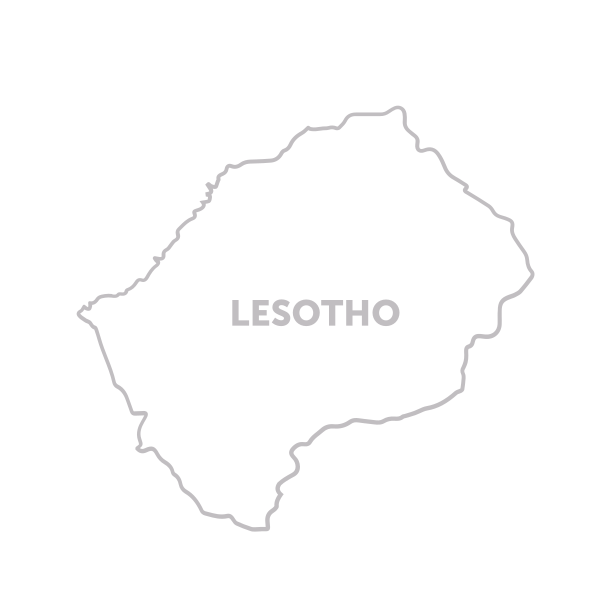
LesothoA Higher Plane Podcasts featuring Lesotho
March 16, 2009
Program Overview, part 1a, Lesotho
March 17, 2009
Program Overview, part 1b, Lesotho: Flying Doctors
March 18, 2009
Program Overview, part 1c, Lesotho: Partners in Health
March 19, 2009
Program Overview, part 1d, Lesotho: Orphans
March 20, 2009
Program Overview, part 1e, Lesotho: Samaritan's Purse (Shoe Box) and the Herd Boys
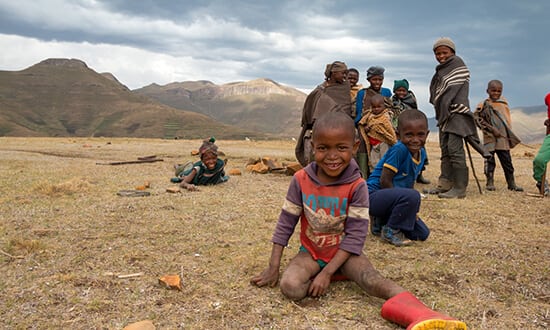
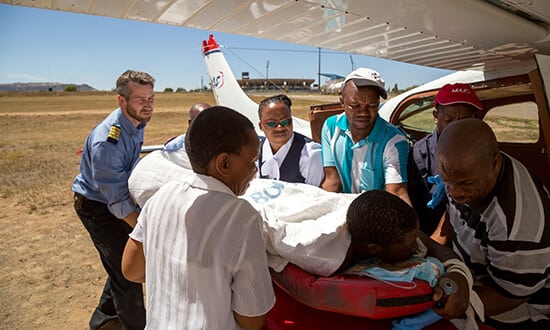
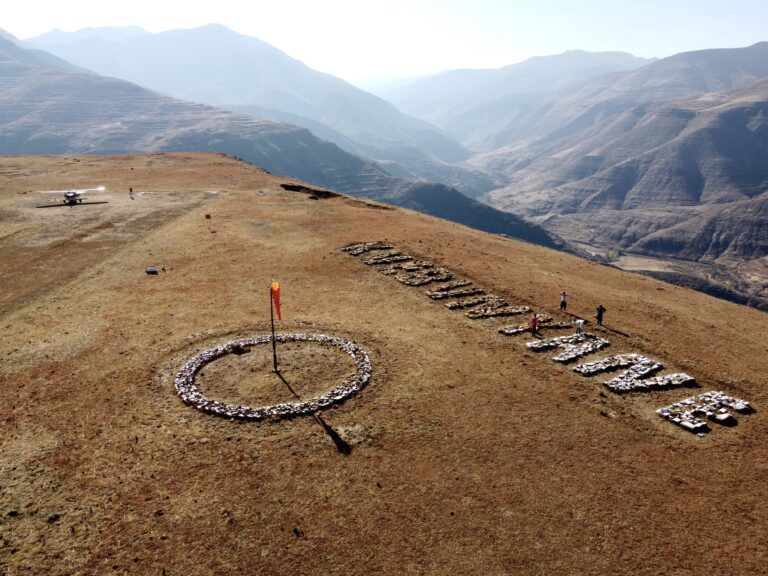
Photo SupplementMAF (Mission Aviation Fellowship) provides vital aviation and radio communications services to national churches, the Flying Doctor Service, Christian missions, and nongovernment organizations (NGOs) ministering in Lesotho. THE NEED One could easily name this small African nation "the kingdom in the sky." The lowest spot in this rugged country rises 4,583 feet above sea level. Smaller than the state of Maryland and completely surrounded by the nation of South Africa, Lesotho is a mountainous country made up of tiny, often inaccessible villages. The few available roads are poor, rendering transportation insufficient and unsafe. The communications system within the country is inadequate at best. Nearly half of all the native Basotho people are unemployed. More than one-third of the men have left the country seeking employment as miners or agricultural workers in South Africa. Due to persistent drought and resultant famine, the people of Lesotho are dependent upon food aid for their survival. In 2007, the worst drought year in three decades, some 400,000 people—a fifth of the total population—were in need of food aid. By July 2008, the price of maize meal, the staple food in Lesotho, had increased by more than 55 percent over the previous year. According to United Nations Children’s Fund (UNICEF), some 38 percent of Lesotho’s children under age five are chronically malnourished. Recent droughts have dried up 30 percent of the country’s water sources. The Lesotho Department of Rural Water Supply and the Ministry of Health and Social Welfare (MoSW) state that 60 percent of the country’s health centers and 30 percent of homes do not have access to clean, safe water. Even with favorable weather conditions, less than 10 percent of the land is arable. The lack of roads and ruggedness of the terrain make it nearly impossible to provide farmers with fertilizer and seeds at the ideal planting time. There is no irrigation farming or agricultural infrastructure. Assessment teams suspect the country’s cereal production is in a downward trend caused by long-term soil erosion, erratic weather, and the impact of the HIV/AIDS pandemic. As much as 32 percent of Lesotho’s population is infected with the HIV/AIDS virus, and 100,000 AIDS orphans live in mountain villages with little or no access to medical services. Households caring for orphans and chronically ill family members frequently have nothing to eat. While AIDS continues to be an alarming threat to Lesotho and its people, land degradation, capacity depletion, and economic decline hinder the assistance efforts of humanitarian, development, and mission organizations. Although some 90 percent of Lesotho’s population considers itself Christian, traditionalism and nominal Christianity is widespread with little understanding of the truth of the Gospel. THE SOLUTION Since 1980, MAF has provided safe, efficient air transportation for the Lesotho Flying Doctor Service (LFDS). In addition, MAF provides weekly flights to six health clinics operated by Partners In Health (PIH). Nearly 200,000 people depend solely on LFDS and PIH for medical care. Currently, MAF serves 12 rural mountain health posts from 22 dirt airstrips carved into the nation’s rugged mountains. MAF services enable the work of 38 partner agencies, including Africa Inland Mission (AIM), Southern Baptist Mission, William J. Clinton Foundation, Catholic Relief Services (CRS), Samaritan’s Purse, and Apostolic Faith Mission (AFM). In the past year, MAF has seen a 10 percent increase in the number of emergency medical evacuation flights, as there are more doctors in the mountains to treat patients and send them to hospitals. More missionaries are also coming to the mountains, which adds to the demand for MAF services. IMPACT 2008 HIGHLIGHTS In the past 12 months, the MAF program in Lesotho ...
KEY GOALS 2009 Acquire two additional aircraft to meet increasing flight needs.
THE COST This year, it will require $1,630,840 to operate ongoing programs, launch new initiatives, and expand services in Lesotho. Total funding from support raised by MAF missionary staff and from field revenue amounts to $1,522,772—or 93 percent of total operating costs. We seek the remaining seven percent—or $108,068—from caring partners: individuals, churches, and foundations. MAF STAFF SERVING IN LESOTHO
ADOPT "7P-CMH" |
Menu |

earning rewards and enjoying exceptionally low rates!