Story and photos by Svein-Robert Solberg
It is early Saturday morning in the Kingdom of Lesotho—a mountain nation rightly called the Kingdom in the Sky. Birds are singing, and the sun has just begun to warm the mountaintops surrounding Maseru, the capital. I had just sat down to eat breakfast when the phone rings.
“Dave has been called out. Code 1. He’ll pick you up in a few minutes.”
It’s Gerd LePoidevin, wife of MAF pilot Dave LePoidevin. Her voice is calm, but serious. Code 1 means a medical emergency. It means urgency. Every minute counts.
I run to my room and quickly pack my bag—some food, water, warm clothes. In Lesotho, anything can happen. If another Code 1 comes in while we’re out, there might not be room for me on the return flight. I could be dropped off in the bush and have to find a way to make it through the night.
A few minutes later, Dave picks me up. We drive as fast as we can—legally—through Maseru. Traffic is heavy, the streets full of cars, people, and life—yet we both know another life is waiting.
At the airport, we meet Potello, the operations manager for the day. The message is serious: A woman in the mountains near Kuebunyane is critically ill. They suspect diabetes but are not certain. She’s lethargic and unable to walk. It could be life-threatening. The small clinic in Kuebunyane has done all it can. She must be flown to Tebellong Hospital in Qacha’s Nek for a proper diagnosis and treatment.
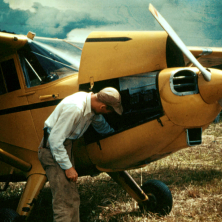
The aircraft—a 1985 Cessna 206—is ready. As always, Dave performs a thorough safety check; the lives of both crew and patient depend on it. We wait for the nurse who will accompany us. She is stuck in traffic, but on her way.
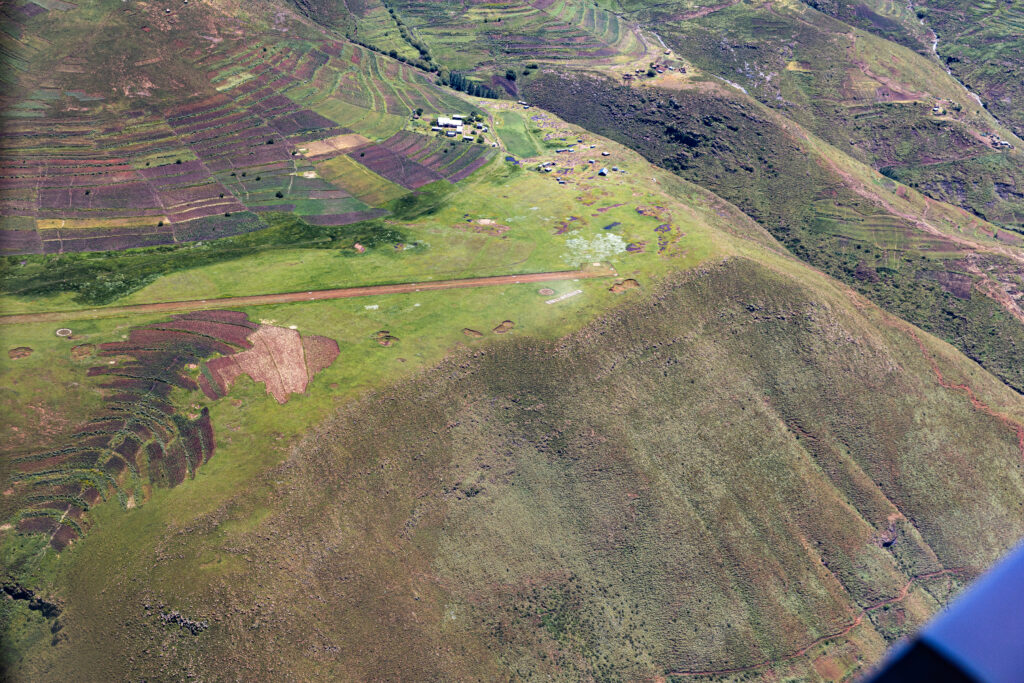
In Maseru, the weather is perfect with blue skies, sunshine, and a light breeze. Then comes the message we feared: up in Kuebunyane, there is rain and strong winds, too much wind to land. Lesotho is a land of mountains and sudden weather changes. The airstrip in Kuebunyane sits on a small plateau on a mountainside—exposed and known for challenging wind conditions.
Dave looks at me and quietly says, “We’ll pray the weather clears by the time we get there. God has about 52 minutes.”
We climb into the plane and Dave prays, as he always does before take-off. Then the Cessna roars to life, and we lift off.
A life is waiting.
Below us, Lesotho unfolds in all its raw beauty—mountain ridges, valleys, rivers and waterfalls, small villages and homes clinging to places where no one would think anyone could live. The few roads that exist high in the mountains are rough and dangerous. Getting anywhere takes time. Time you often don’t have on a Code 1 mission.
Far ahead, dark, heavy rain clouds hang over the mountains. But almost unbelievably, as we approach Kuebunyane, they begin to disappear one by one. The sun breaks through. The sky turns blue.
What about the wind?
Dave flies over the airstrip and checks the wind sock. “I think we got our answer,” he says with a smile.
The wind sock hangs straight down. No wind. A miracle.
I whisper softly, “Thank You, God.”
We land.
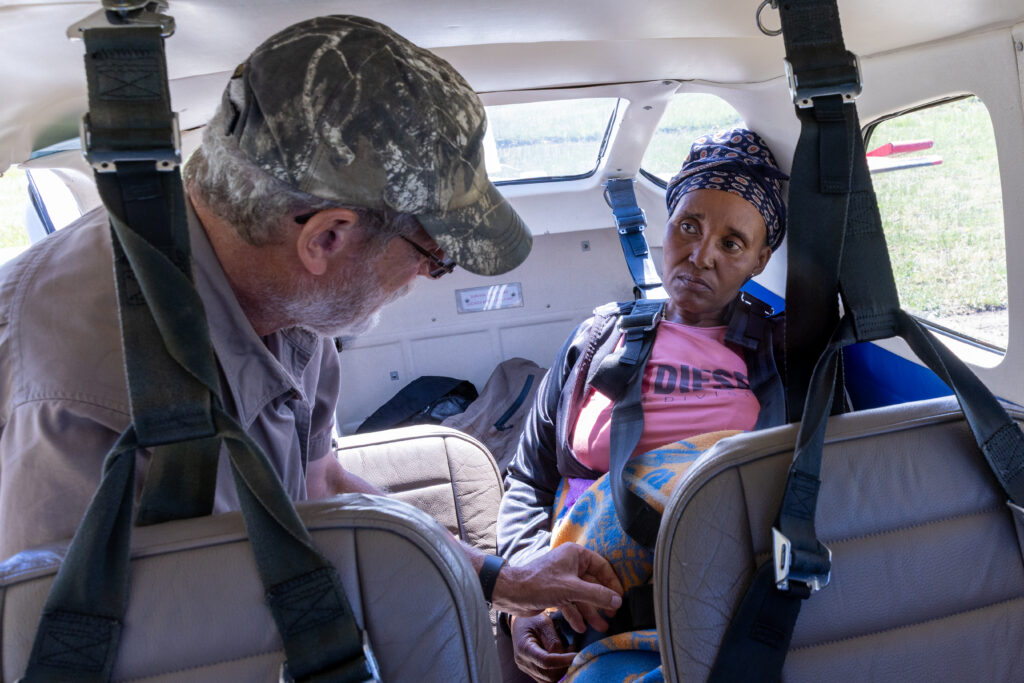
The patient arrives on a stretcher. The woman looks ill. When asked if she can sit upright in the plane, she nods slightly. She cannot walk, so she is helped on board. Dave gently fastens her seatbelt.
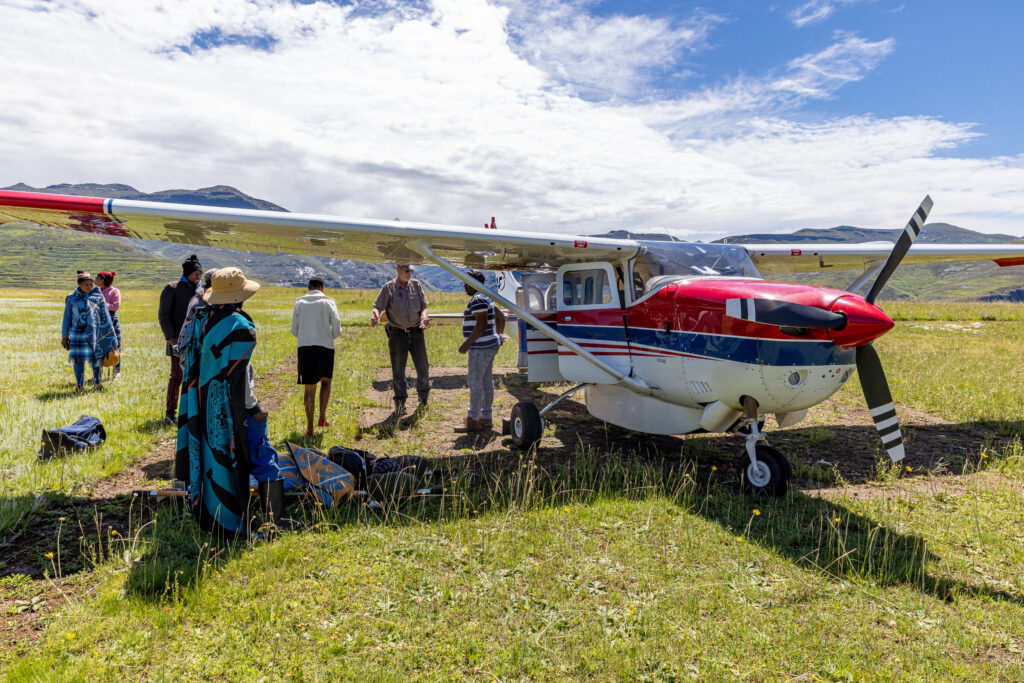
Up here in Kuebunyane, cars and airplanes are unfamiliar means of transportation. This is her first time flying. She is afraid. Dave meets her fear with calm eyes and a peaceful voice, assuring her that everything will be okay.
Her husband gently pats her cheek and says goodbye. The gratitude in his eyes is strong.
MAF has come. There is hope.
Her daughter joins us, along with the nurse. We wave farewell and take off toward Qacha’s Nek, near the South African border. The flight takes only about 14 minutes. The weather remains calm with little turbulence—a gift for a sick and frightened patient. Dave lands smoothly. The woman exhales in relief.
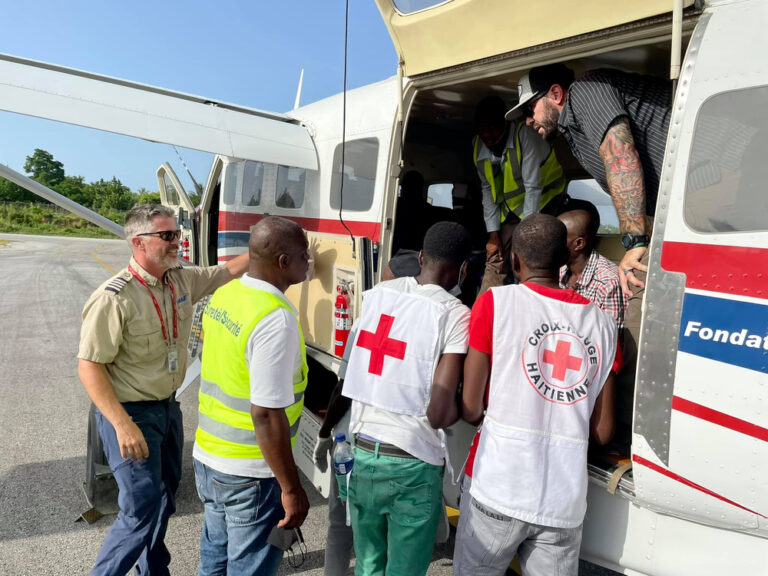
At the airstrip in Qacha’s Nek, we hear sirens. An ambulance pulls up beside the plane, and the patient is transferred, her daughter and the nurse going with her.
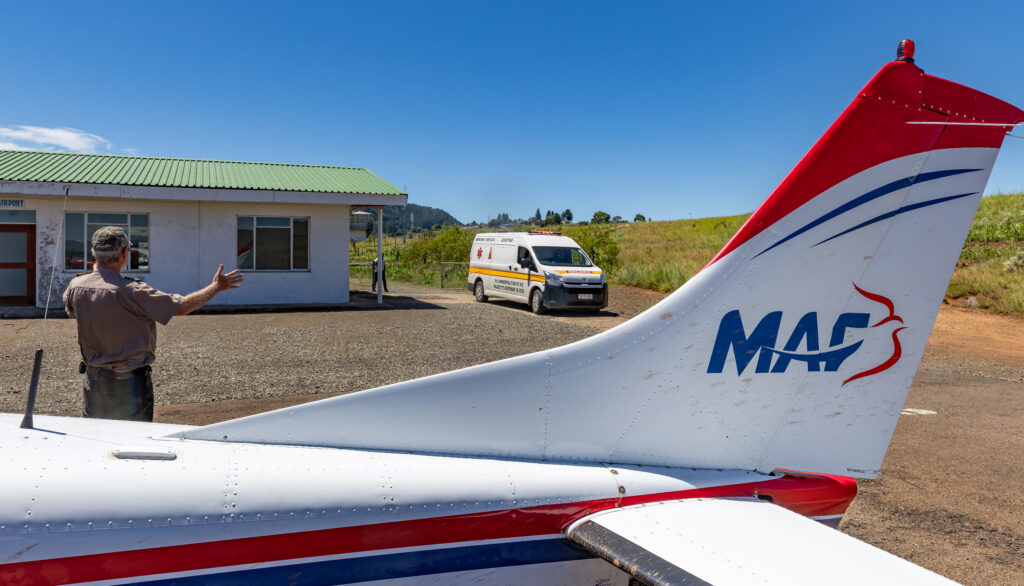
Dave and I remain standing by the aircraft, watching the ambulance disappear around the corner. We say another quiet prayer—that the doctors will find out what is wrong, that she will receive the treatment she needs, that we were not too late.
On the flight back to Maseru, I feel deep gratitude. For being part of an organization like this. For people like Dave. For the privilege of being a small piece in someone else’s story.
Maybe today, we helped save a life.
*Svein-Robert is Event and Marketing Coordinator for MAF Norway