by Natalie Holsten and Kimberly van Veen
Longtime MAF staff member Wally Wiley remembers Nate Saint and his family staying with the Wiley family during the Saints’ stateside furlough, when Wally was a kid.
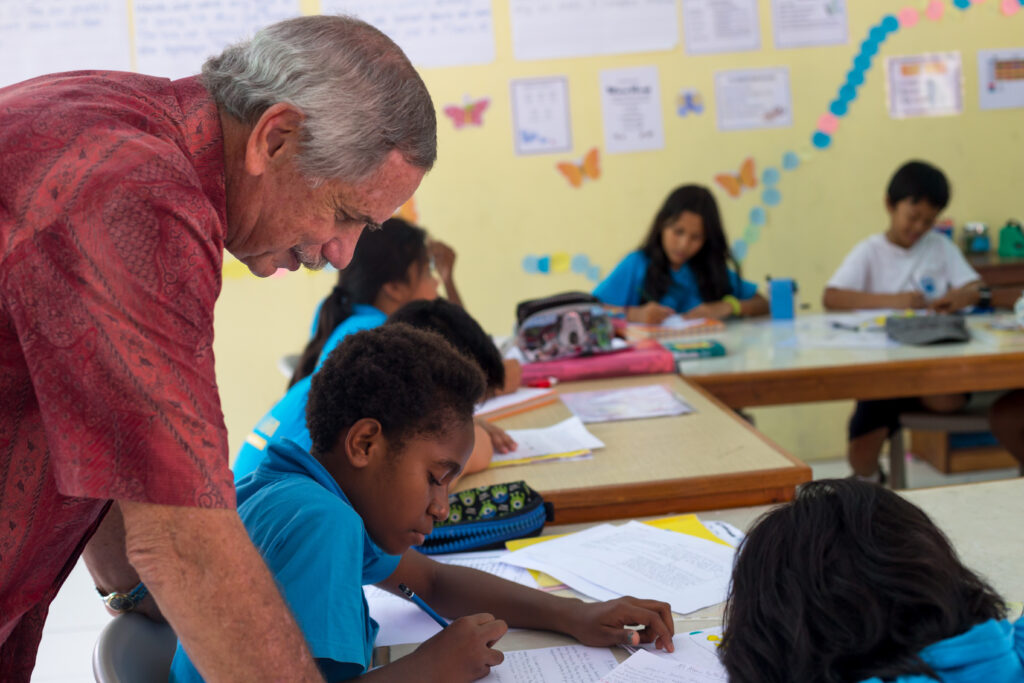
Wally Wiley
MAF pioneer Nate Saint made a big impression on young Wally, and also on Wally’s dad, Claire Wiley, who knew Nate from their time in the Air Force. “Nate would tell Dad that MAF could really use someone like him, with his skills,” Wally recalls.
In addition to working in construction, Wally’s dad had a jewelry store where he held Bible studies. It was in a back room of the store in January 1956 that Wally first learned Nate Saint, Jim Elliot, Peter Fleming, Ed McCully, and Roger Youderian had been killed by the very people they were trying to reach.
“I remember seeing all these grown men crying,” Wally says. “One of them was Fred Elliot, Jim Elliot’s dad. I still have that memory in my mind: seeing them receive the news that the five were killed.”
After Nate’s death, Wally’s father felt God was calling their family into missions, to serve in construction. They eventually served in Mexico, Central America, and South America with MAF.
“Nate had a huge impact on Dad’s calling to go into missions, and my wife, Joan, and I followed in their footsteps,” says Wally. “There’s no doubt in my mind that I would not be here serving with MAF in Papua if it were not for the sacrifice of Nate and the others.”
The influence of this event has even trickled down to Wally’s son, Jared. He and his wife, Teresa, are serving in a school in Papua, Indonesia, with MAF. They are the third generation of this family who were influenced to go into missions as a result of Nate Saint’s death.
Lasting Impact
The deaths of the five missionaries had a profound impact on the missions world. The four missionaries, with Nate Saint as their pilot, were trying to reach the Waorani people, an unreached tribe in the Amazon jungle.
On January 3, 1956, the missionaries flew to a sandbar near a Waorani village along the Curaray River. After an initial positive interaction with several Waorani, on January 8 the five men were speared to death. The news was reported around the world, and the story became well known. An expansive LIFE magazine article featured photographs and interviews with the men’s widows.
As a result of this event, many people—like Wally’s dad—felt a call into missions. And over the years, the story of Nate Saint, or “the Palm Beach five,” ultimately became a tale not only of martyrdom but of redemption.
Retired MAF missionary Gene Jordan grew up in Ecuador with missionary parents. The Saints were friends of theirs, and though Gene doesn’t remember it, he was one of Nate’s passengers as a toddler.
As a teenager in Ecuador, Gene volunteered at the MAF hangar in Shell and soaked in the legacy Nate left behind—one of creative ingenuity and dedicated service. “These high school summers allowed me to see firsthand the positive effects of the MAF airplanes,” Gene shares. “But more than that, they allowed me to see how the pilots impacted, cared for, and loved the people of the five different ethnic groups they served. Nate was first a disciple of, and evangelist for, Jesus. An excellent airman, he was motivated by people lost in their sin, unaware of a God Creator and His Son, sent to express the greatest of love.”
After becoming a pilot and joining MAF, Gene and his wife, Lynn, were assigned to Ecuador, where Gene got to know several of the men who participated in the killings on the beach in 1956. “I got to meet them after they had understood God’s forgiveness and had asked forgiveness of the families whose husbands and fathers they had killed,” Gene says. “I got to see what Nate, Ed, Pete, Roger, and Jim intended for the Waorani—hearts changed so as to be in harmony with their Creator and to live with Him forever.”
Jeremy Simkins, a new maintenance instructor at MAF, was impressed when he read Nate Saint’s biography about 25 years ago, but he never thought he would be able to go into missions like Nate. He’d worked in aviation for several years at that point and burned out on the industry. Jeremy was impressed with Nate’s mechanical ingenuity and problem-solving ability. “It made me think that if I were ever called to missions, it would be for aviation. But God would have to do a big change in my heart because I was so burned out on aviation,” he says.
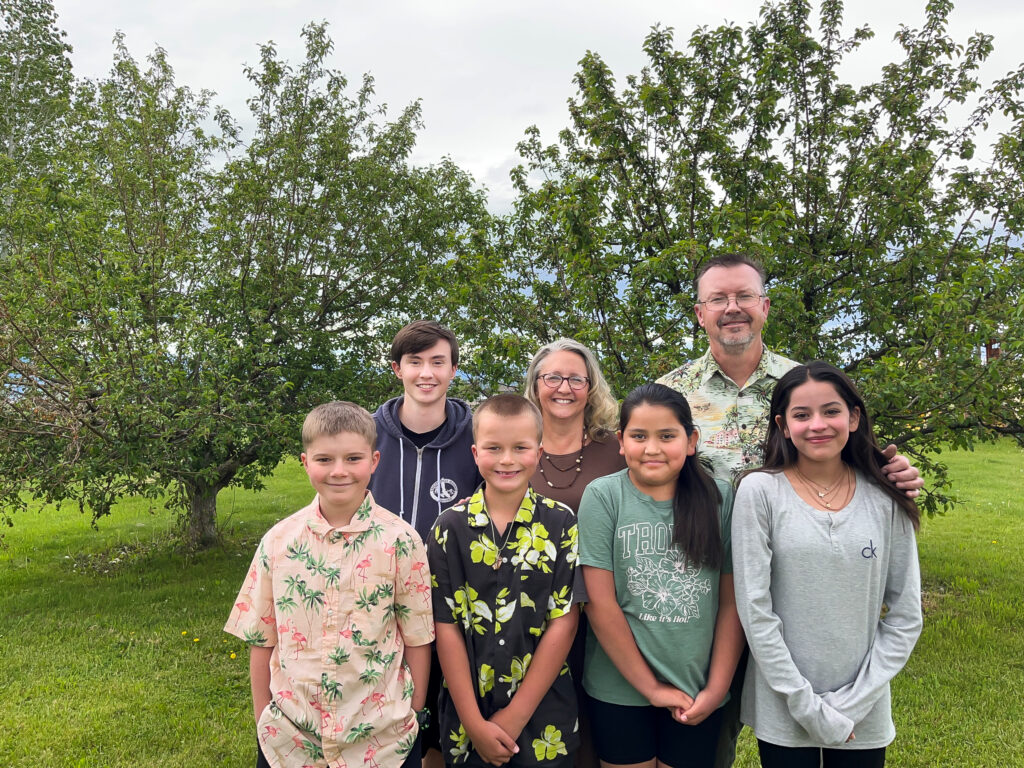
The Simkins Family
But he continued to follow MAF’s work and the work of Nate Saint’s son, Steve. Finally, after many years away from the aviation industry, Jeremy couldn’t get the idea of mission aviation out of his mind. He was sure he was too old. MAF assured him he could be well-used in the hangar, so last year, the Simkins joined MAF. “It’s a bit humbling to be here now,” says Jeremy.
Beyond MAF, Nate’s legacy continues even in Ecuadorian missionaries Diego and Anavela Ushiña. The Ushiñas serve in Kusutka, Ecuador, pastoring several congregations of Shuar ethnic believers. They are sent out by the Assemblies of God church in Ecuador and have been serving in the remote communities for almost 20 years. Diego was called to missions after reading about Nate Saint in a missions magazine at age 14.
Diego says the story ended by stating that few people were willing to give their lives to serve as missionaries in the heart of the Ecuadorian jungle. After reading that, Diego recalled, “I bent my knees in my living room and said I want to go where no one wants to go to do missions.”
According to missiologist Ed Stetzer of the Talbot School of Theology at Biola University, “It’s hard to overstate the missions impact of that day on a beach in 1956, when those young men were killed by the Waorani … Their story spurred thousands to step into global missions … it’s worth noting that in some ways it signaled a shift—from missions as conquest to missions as sacrifice.
“Their martyrdom spawned a movement that still impacts us today—with a focus on gospel-centered mission that’s worthy of our emulation.”