By Hannah Braly
Pilots in countries like the United States have many tools available to help understand the wind: air traffic control, aircraft instruments, weather reports, and more.
On airstrips in remote parts of the world, some of these may be available—but it’s not guaranteed.
However, there’s one tool that nearly always is: the windsock.
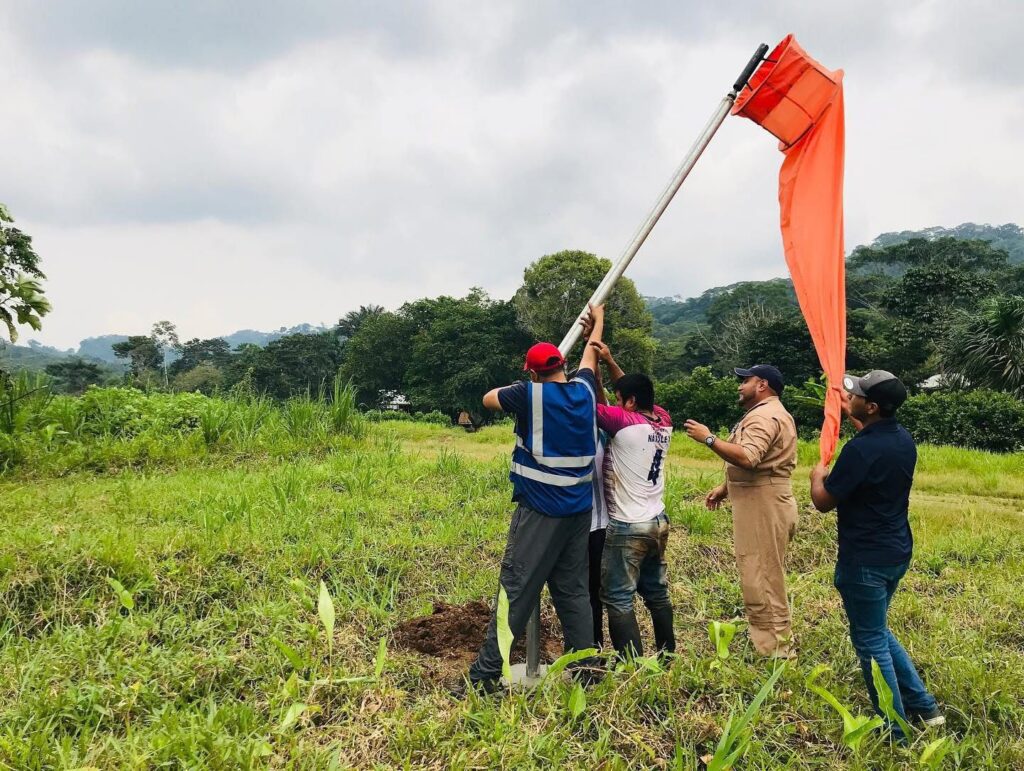
“A windsock is a device installed on either side of an airstrip that visually indicates the direction and approximate strength of the wind,” said Cristina Castillo and Samuel Arce, Mission Aviation Fellowship staff members based in Ecuador. “Its main function is to provide pilots with a quick reference for determining wind conditions before takeoff and landing.”
How windsocks work
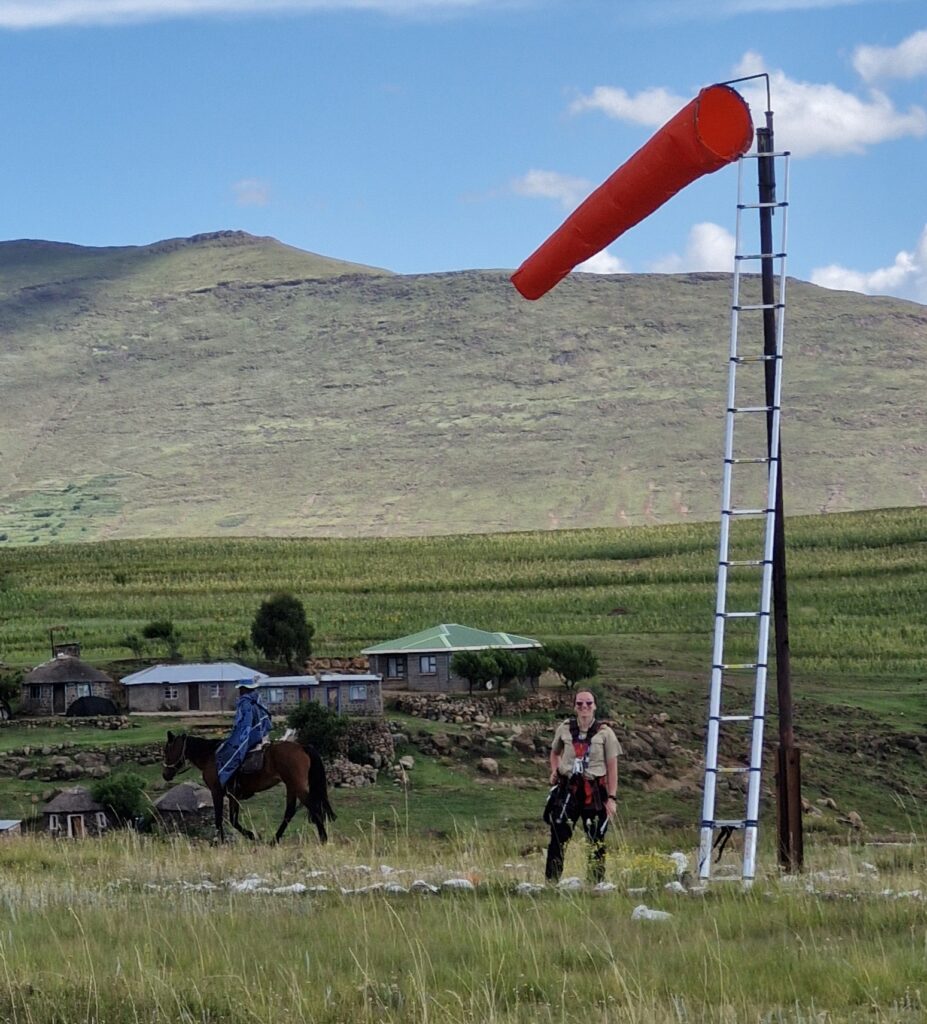
Windsocks indicate both the direction and speed of the wind. In Mission Aviation Fellowship’s (MAF) Lesotho program, a fully extended windsock indicates a wind speed of 15 knots. Pilots must consider this, as well as plane speed, when calculating takeoff and landing.
“We might be flying 55 knots on final approach,” said MAF pilot Dave LePoidevin. “But with a 10-knot headwind, we will be moving at 45 knots across the ground, so we’ll have a shorter ground roll after touchdown.”
When you’re operating on short, mountainous airstrips, information like this is crucial. But it isn’t just the headwind speed that pilots like Dave consider.
“In the mountains of Lesotho where it is extremely windy, we occasionally see one sock indicating wind from one direction, and the second sock indicating wind from the opposite direction,” said Dave. “It’s pretty crazy!”
Sometimes, windsocks indicate such strong wind conditions that pilots abandon landing or adjust so they won’t run off the airstrip.
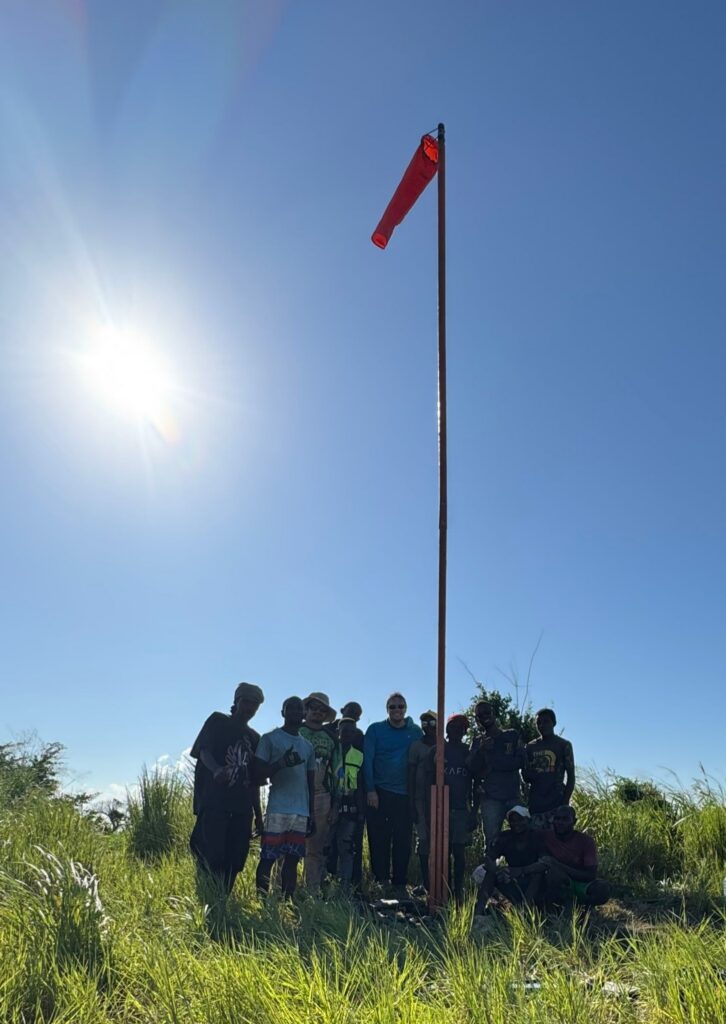
Windsock maintenance
Because windsocks are so crucial for safe takeoffs and landings, it’s important that they are replaced regularly.
“Windsocks in Lesotho last about a year or two,” said Dave. “Replacing them either requires tipping the pole down or putting up a ladder and climbing—which is what I prefer.”
Using a ladder that folds to fit into a cargo pod, MAF staff secure both themselves and the ladder to the pole and get climbing—most windsocks are mounted on 10- to 15-foot poles.
Mission critical
“Although it’s a simple device, the windsock provides an immediate visual reference that allows pilots to adjust their approach, alignment with the runway, and landing technique—all of which reduces risk and contributes to safer operations,” said Cristina and Samuel.
Just as windsocks are a simple but critical device, so are the monthly donations from our Flight Crew community.
While recurring gifts might seem like a set-it-and-forget-it donation technique, they allow us to anticipate needs, adjust our approach, stay aligned with the communities we serve, and ensure our planes continue to fly safely.
Thank you for being a part of Flight Crew.