How MAF Flights Support One Tribe’s Faith Journey
Daud Ipin is the oldest man in Binuang.
In his 87 years, he’s seen his village transform from complete isolation to sending children away to college, building a small medical clinic, and making phone calls via Starlink satellite—all with MAF playing an instrumental role.
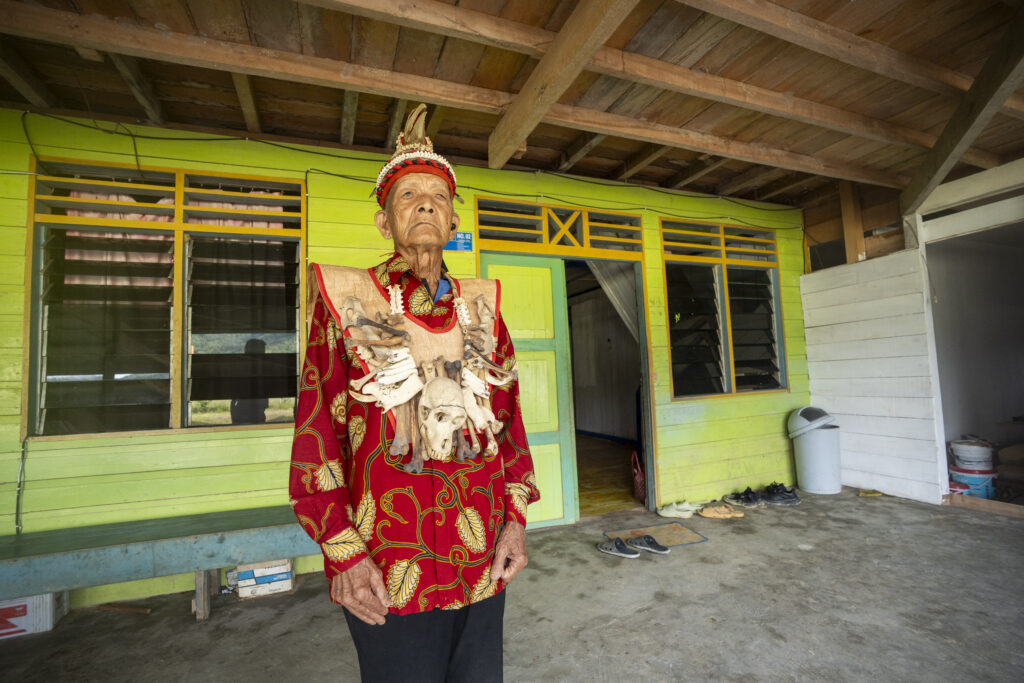
Daud Ipin stands in front of his son’s home in Binuang, a village in Kalimantan served by MAF since 1980.
Photo by Lemuel Malabuyo
Daud remembers riding on his father’s shoulders through the jungle to a neighboring village to hear a new message about someone called Jesus. Though he doesn’t have the fondest memory of the three-day hike (“the thorns from the ratan trees kept scratching me”), he understood the significance of the journey.
His people, the Lengilo’, are one of hundreds of Dayak tribes in Kalimantan, the Indonesian portion of the island of Borneo. Before the gospel came, the Lengilo’ practiced animism, basing their lives on the movements of birds. They were also headhunters, exerting power over their enemies by taking heads from neighboring tribes.
Their language had no words for “thank you” or “I’m sorry.”
Then things changed.
“People were serious about the gospel message,” he recalls. “They heard and believed and put the old ways behind them.”
Decades after the Lengilo’ church formed, believers learned how MAF flights were helping villages in West Kalimantan. So they asked Mission Aviation Fellowship to bring the airplanes to their area, too. Daud, who served as a teacher, convinced the villagers in Binuang to build an airstrip.
All of a sudden, the world opened up to them.
Pastor Yulius, one of Daud’s 12 children, remembers helping build the airstrip. And he remembers the first time MAF landed. “Before MAF came in 1980, we didn’t know about the world,” he explains. “People here were amazed to see something so heavy and made of metal flying in the sky! They were so happy because it was the first time they had a new hope for their lives. They saw it and knew it was a blessing from the Lord.”
With the MAF plane, students from Binuang could now travel to further their education. Pastors and evangelists could come to teach and hold special services. Medical patients could be flown to the hospital.
“Before MAF,” Daud says, “if you were seriously sick, you just died.”
As Daud speaks, the voices of schoolchildren ring out across the airstrip as they sing a newly written worship song in their own language. Their song is a testament to how the gospel took root 80 years ago and grew, and how—with MAF’s help—it continues to impact the current generation.
Over the past several years, MAF has flown dozens of flights in support of Kartidaya, a Bible translation organization working alongside a small team in Binuang to translate the Bible into the Lengilo’ language, starting with the book of Luke.
Diono, another of Daud’s sons and one of the Lengilo’ translators, says most people in the village have at least a basic understanding of Indonesian, but reading the Indonesian Bible isn’t the same as having scriptures in their heart language.
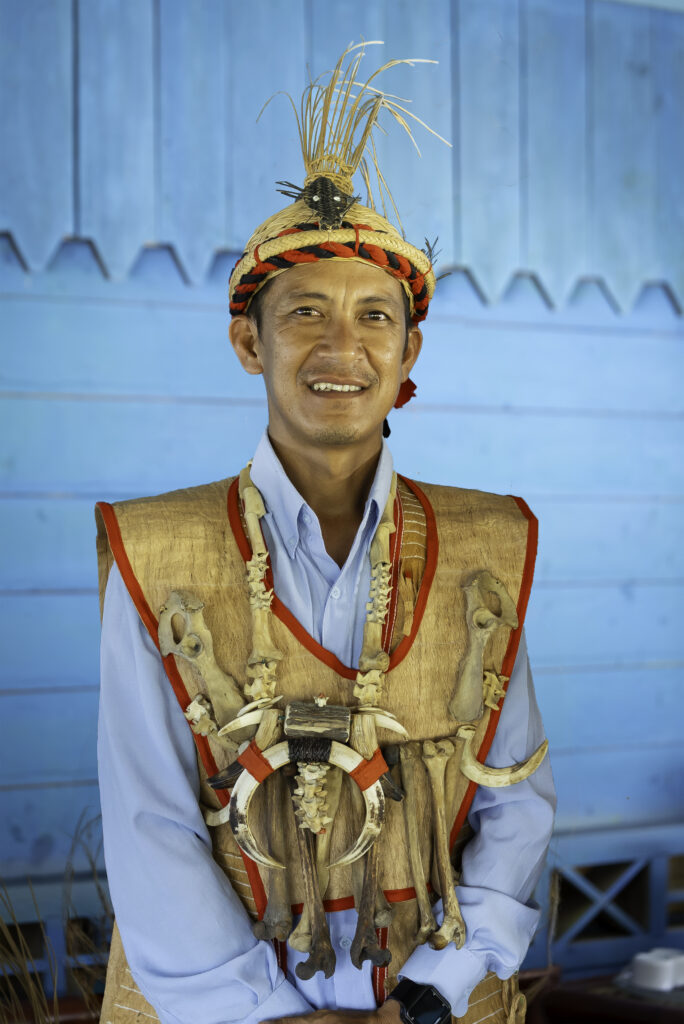
Diono Daud, one of the Lengilo’ translators in Binuang.
Photo by Lemuel Malabuyo
“The Bible is God’s word to us. Every tribe in the world is a recipient of this word. Every language, every tribe, needs this word in their language. It’s what connects us to the Lord, and we will be closer to Him if we have it in our heart language,” Diono says.
With the book of Luke, scripture came alive for the people of Binuang in a new way.
Many people, Diono said, were moved to tears when they listened to the words of Jesus in Lengilo’.
And for the first time, Lengilo’ church services now include Lengilo’ songs, rather than singing in a second language like Indonesian or another dialect.
“We were asked to write songs in Lengilo’ based on the book of Luke,” shares Agustina, one of the translators. “We prayed, and the Lord gave us the wisdom and knowledge we needed. I was so happy I wanted to cry when I heard our songs sung by the church members.”
MAF flights are critical to the translation process. “The challenge is getting the people of Kartidaya together with the people of Binuang,” says Jeremy Toews, MAF Kalimantan program director. “Kartidaya is based in Malinau, a town that’s about 60 miles away. And that’s not an easy 60 miles—that’s 60 miles of jungle.”
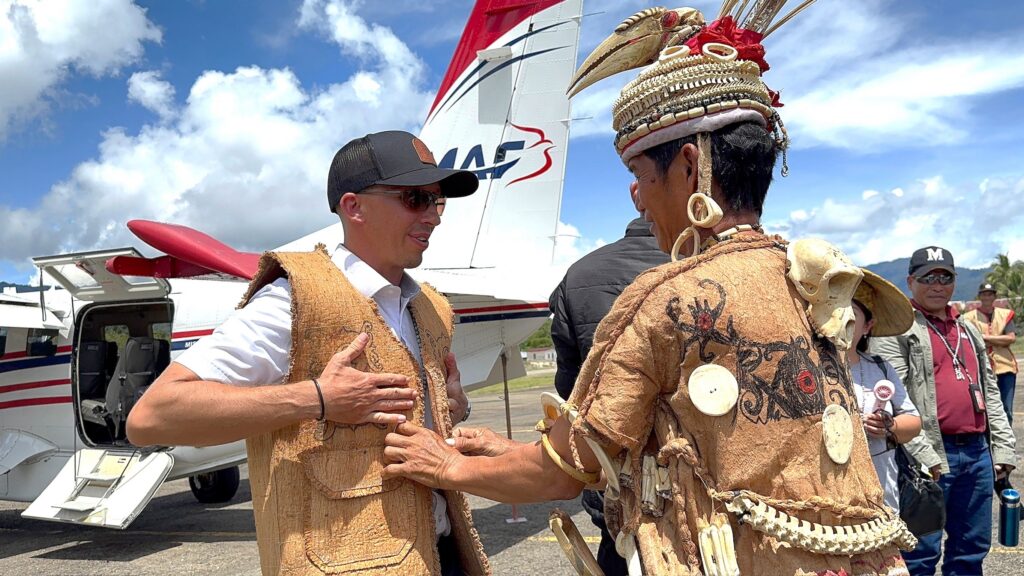
MAF pilot Jeremy Toews receives the gift of a traditional bark vest from a villager in Binuang.
Photo by Revy Liando
A crude road connects the two locations, but for most of the year it’s impassable even by 4×4. A 25-minute MAF flight is usually the only transportation option.
“Without MAF’s help, I couldn’t have done the translation,” Diono says. “When I know MAF is picking me up, I don’t have to worry.”
Because of MAF, Daud says, the tribe can remain in their corner of the rainforest, ensuring their culture, way of life, and language are preserved. “If we didn’t have MAF, we wouldn’t be here. We would have been forced to migrate to Malaysia or the city, so our kids could get an education and we could have medical care.”
Diono gestures to the beauty around Binuang, the jungle, the mountains, the rice fields. Living so far from “civilization” makes it easy to feel forgotten. “People say the jungle here is the ‘lungs of the world’ and we protect the forest and water. If that’s so important, why don’t people in the cities seem to care about us? But with MAF, we feel like God has sent angels to help us.”
Through thousands of flights, MAF has continued to care for the Lengilo’ people—sustaining the gospel-rooted transformation that began 80 years ago—in Daud’s childhood—and endures today.